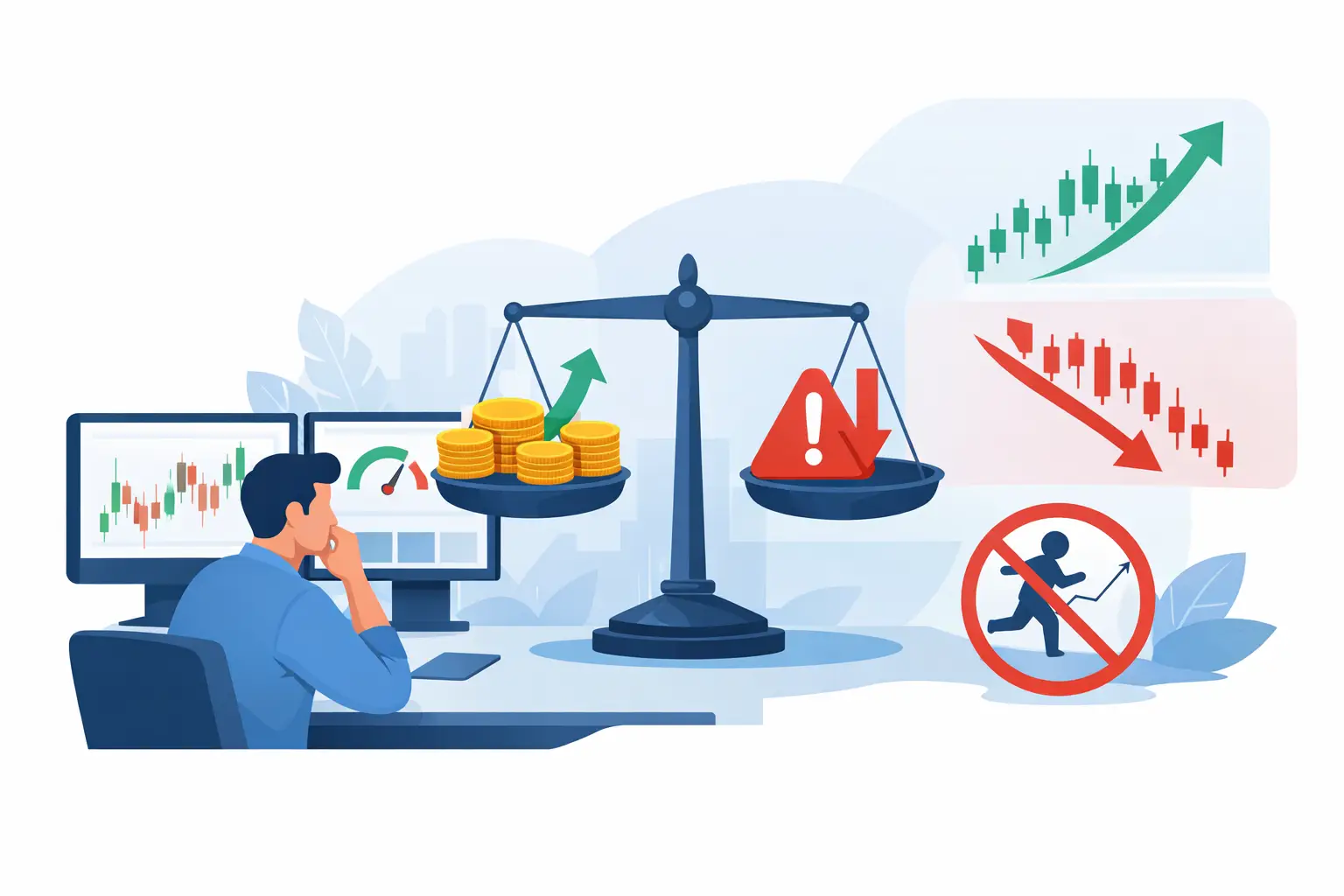
One bad trading session usually does not start with a terrible setup. It starts with one extra trade. Then another. Then a revenge entry after a stop-out, a late chase after price already moved, or a position opened just to feel active. If you want to learn how to prevent overtrading in forex, the real fix is not more willpower. It is tighter process control.
Overtrading is one of the fastest ways to damage an otherwise workable strategy. It increases transaction costs, weakens entry quality, magnifies emotional decision-making, and often pushes traders into risk exposure they never planned to carry. In forex and metals, where price moves around the clock and opportunities always seem close, the pressure to stay engaged can become expensive very quickly.
What overtrading actually looks like
Many traders define overtrading too narrowly. They assume it only means taking too many positions in one day. That is one form of it, but not the only one.
Overtrading can also mean increasing lot size after losses, opening multiple correlated positions that stack risk, entering without confirmation because the market feels active, or interfering with a plan just to create more action. A trader can place only three trades in a day and still be overtrading if those trades violate risk rules or force exposure in poor conditions.
The core issue is not volume alone. It is unnecessary exposure. When trade frequency rises faster than trade quality, discipline has already started to break down.
Why forex traders overtrade
Forex creates a perfect environment for impulsive execution. The market is open through major global sessions, leverage is easily available, and chart movement gives the illusion that there is always something to capture. That combination can make inactivity feel like missed opportunity, even when standing aside is the correct decision.
There is also a psychological trap built into short-term trading. After a win, traders often feel sharp and increase activity. After a loss, they try to recover quickly. Both reactions can lead to the same result - too many positions opened for the wrong reasons.
For newer traders, overtrading often comes from a lack of structure. They do not have hard limits, so every chart becomes a possible setup. For experienced traders, the problem is usually less obvious. They may have a strategy, but they override it when volatility spikes or when they believe they can read the market better in real time.
How to prevent overtrading in forex with hard limits
The most effective way to reduce overtrading is to remove discretion from the parts of trading that usually break first. That starts with measurable limits.
A daily trade cap is a practical first layer. If your plan supports two high-quality setups per session, there is no reason to take six. A daily loss cap matters just as much. Once a predefined drawdown is reached, trading should stop for that period. This is not hesitation. It is risk governance.
Time-based limits also help. Many poor trades happen outside planned sessions, when liquidity shifts or fatigue affects judgment. Restricting execution to the times your strategy was built for can dramatically improve selectivity.
Position limits should be equally strict. If you trade EURUSD, GBPUSD, and XAUUSD at the same time, your account may be carrying more concentrated USD exposure than you realize. Overtrading is often hidden inside correlated positions that look separate on the platform but behave like one larger bet.
Build a system that defines when not to trade
Most traders focus too much on entry rules and not enough on exclusion rules. A serious trading framework should define not just when to participate, but when to stay out.
That means identifying the market conditions where your edge is weak. Maybe your system performs better during trend continuation and poorly during low-volatility drift. Maybe RSI filters help avoid late entries in stretched conditions. Maybe a directional filter keeps you from fading strong momentum. Whatever the logic, the point is the same: selective engagement protects capital.
This is where disciplined automation has a real advantage. A well-designed execution engine does not get bored, frustrated, or tempted by random chart movement. It follows conditions. It can pause after hitting daily limits, avoid poor-quality setups through filters, and manage exits without emotional interference. That does not remove risk, but it does reduce one of the most common sources of unnecessary trading - the human need to stay involved.
Replace impulse with a pre-trade checklist
If you trade manually, every position should pass through the same gate before execution. A checklist sounds simple, but it creates a pause between impulse and action.
The checklist does not need to be long. It needs to be strict. Is this setup inside your approved trading session? Does it match the strategy rules exactly? Are trend conditions aligned? Has your daily risk limit already been reached? Are you entering because the signal is valid, or because the last trade lost?
That last question matters more than most traders admit. Emotional carryover is a major cause of overtrading. A clean checklist exposes it quickly.
If you cannot answer each item clearly, the trade is not ready. Precision is protective. Ambiguity is usually expensive.
Risk management has to control behavior, not just losses
Traders often treat risk management as something that happens after a trade is opened. In practice, the best risk controls shape behavior before the entry ever happens.
Lot sizing is a clear example. When risk per trade is standardized, traders are less likely to escalate after a losing streak. When it is loose, every loss invites compensation behavior. The same applies to basket exposure. If several positions can open within the same directional idea, there needs to be a maximum cycle loss and a clear point where the strategy stops adding risk.
Profit targets can help as well, but only when they are tied to discipline rather than greed. If your account reaches a planned daily or weekly objective, pausing can be smarter than pressing for more. Many gains are given back not because the market changed, but because the trader did.
Automation can help, but only if the logic is selective
Some traders assume automation automatically solves overtrading. It can, but only if the underlying system is built around control rather than constant activity.
A weak bot simply automates bad habits. It may trade too often, enter in poor conditions, or keep cycling through setups without context. A stronger system uses filters, directional logic, and layered protections to participate only when conditions justify exposure. That distinction matters.
For traders using MT4 or MT5, the goal should not be nonstop execution. It should be controlled execution. A platform like ForexPhantom is built around that principle: adaptive logic, selective entries, and capital protection mechanisms designed to reduce blind trading rather than multiply it. That kind of structure is useful because it aligns with the real objective - not more trades, but better-managed risk.
Track the behavior behind the trades
If overtrading is a repeating problem, performance review needs to go beyond profit and loss. You need behavioral data.
Look at how many trades were outside your plan. Track entries taken after a loss, trades opened outside your primary session, and positions added without a new signal. Review whether your worst days came from bad market conditions or from ignoring the system.
This matters because overtrading often hides behind activity that feels productive. A trader can spend hours at the screen and still be moving further away from consistency. Metrics expose that. If your best results come from fewer, cleaner trades, then frequency is not helping you. It is diluting your edge.
The real goal is controlled participation
There is no prize for being in the market all the time. In forex, restraint is often a performance skill, not a missed opportunity. The traders who last are usually not the ones taking the most setups. They are the ones with rules strong enough to filter noise, cap losses, and protect decision quality when conditions turn unstable.
If you are serious about how to prevent overtrading in forex, start by treating every unnecessary trade as a systems failure, not a discipline accident. Build limits that hold under pressure, use tools that reduce emotional interference, and let selectivity do more of the work. Sometimes the smartest trade decision is not the next entry. It is the decision to stay controlled long enough for the right one to appear.